Capitals Wire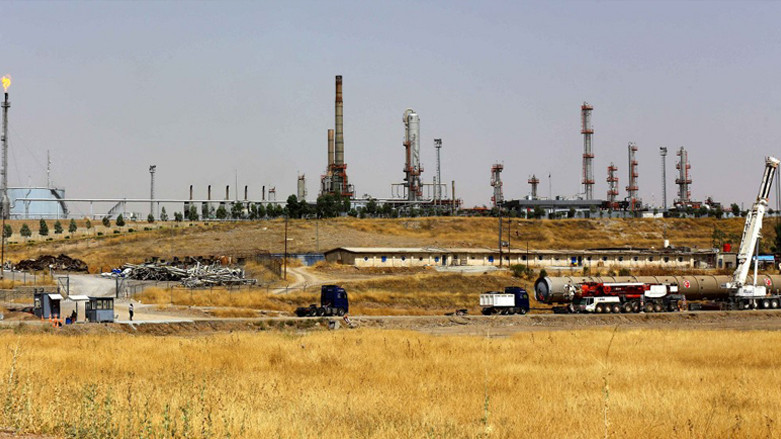
Home Energy Crude Oil Tsvetana Paraskova What I Cover Tsvetana Paraskova is an energy and commodities journalist who has contributed to Oilprice.com for nearly a decade, covering global energy markets, commodities,... More Info Set us as your preferred Google source Premium Content By Tsvetana Paraskova - Oct 07, 2026, 5:00 PM CDT Global oil inventories have been severely depleted by eight months of Middle East conflict, leaving the market with very little cushion against another major supply disruption. Oil flows have recovered but the system remains extremely fragile, with abnormal shipping routes, soaring tanker costs and constrained fuel exports keeping crude and product markets tight.
Industry executives warn another major disruption could send prices sharply higher, with Vitol’s CEO even pointing to a potential $200-per-barrel scenario if crucial Middle Eastern flows are lost. The world is nearly out of buffers to cushion the supply shock of the Iran war, which raises the floor under oil prices each time re-escalation threatens oil supply from the Middle East, top industry executives said this week. Global oil stocks have been depleted as the war enters its eighth month, leaving the market more vulnerable to the next supply shock.
Despite numerous estimates that the Middle East’s crude oil supply is back to –and even exceeding – pre-war levels, the fundamentals show increasingly tighter markets because shipping, trade routes, and tanker costs are anything but normal. Crude oil is flowing in greater amounts, but fuel exports from the region remain severely constrained, putting further upward pressure on diesel and gasoline prices. Eight months ago, the world was headed to a supply glut with OPEC+ gradually easing the production cuts enacted in 2023 and non-OPEC production, especially from the Americas, rising at a steady pace.
But the Middle East crisis has not only wiped out the surplus crude supply, but also depleted the buffers countries had to protect against supply shocks. The result is buffers so thin that the market is one attack on a major infrastructure in the Middle East from seeing another leg higher in oil prices, which have held at $100 per barrel for a month now. The G7 group on Friday announced the release of 100 million barrels of crude oil and diesel stocks.
The announcement failed to move Brent oil prices materially lower as the market fears the thin cushion will keep depleting. “As we go through these cycles each time the floor sets a little bit higher and the system remains a little more sensitive,” Chevron CEO Mike Wirth told the Energy Intelligence Forum in London this week, adding that “the underlying fundamentals are becoming tighter and tighter.” Russell Hardy, chief executive at the world’s biggest independent oil trader, Vitol Group, told the same event that “Over the last 7-10 days as much as 14 million barrels a day was coming out [of the Middle East], which is sort of 2 and 12 of products and crude.” Without these flows, “you do have that $200 dollar a barrel scenario,” the executive added. The world depends on the flows managing to squeeze through the Middle East “to keep things in balance as we go through winter, because there aren't any more inventories to drain in the West,” Hardy noted .
The West is at its limits to release oil stocks, and most of the remaining reserves are practically unavailable because of operational constraints at storage sites and minimum levels of stocks needed for sites to operate. The world entered this crisis with nearly 10 billion barrels of global oil stocks, Saudi Aramco’s CEO Amin Nasser said at the Energy Intelligence Forum. Since then, nearly 3 billion barrels of gross oil supply were lost, or roughly half the crude and products that would normally have moved through Hormuz over the same period.
Part of this loss has been mitigated by more than 1 billion barrels from global oil stocks, Nasser said. “Estimates suggest less than 6 billion barrels of commercial inventories remain today, with the vast majority not practically available,” the executive added. “So the system is already straining.
And, with precious little else the world can turn to, the supply resilience cushion is scarily thin.” For seven months, many market participants have hoped against hope that the war would end any day now and oil flows would return to normal a few days later. Now, the realization that the world has few barrels left to spare and continue offsetting the supply disruptions keeps oil prices higher and sets the floor higher each time a supply scare emerges in any part of the world. By Tsvetana Paraskova for Oilprice.com More Top Reads From Oilprice.com India Could Boost Crude and Critical Minerals Supply from Ecuador EU Delays Methane Rules, Opens Refinery Talks as Fuel Prices Hit Records Gulf Producers Say Importers Should Share the Cost of Hormuz Workarounds Download The Free Oilprice App Today Back to homepage Tsvetana Paraskova What I Cover Tsvetana Paraskova is an energy and commodities journalist who has contributed to Oilprice.com for nearly a decade, covering global energy markets, commodities,...
More Info Leave a comment EXXON Mobil -0.35 Open 57.81 Trading Vol. 6.96M Previous Vol. 241.7B BUY 57.15 Sell 57.00