Capitals Wire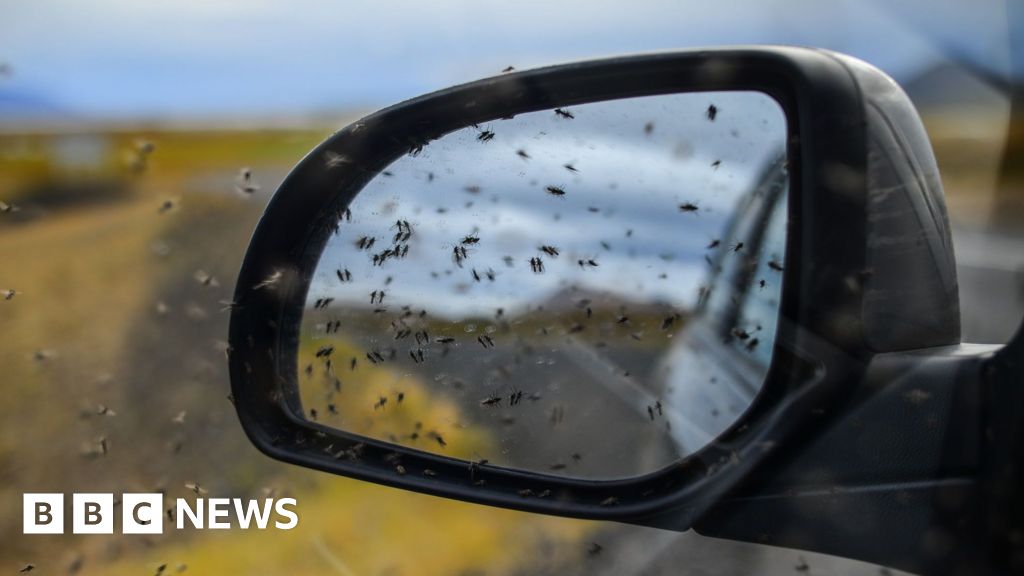
2 hours ago PA Media Researchers will examine how midges and mosquitoes carry diseases They can ruin a Scottish summer holiday with their irritating bites. Now researchers at the University of Glasgow are set to investigate the more serious health risks posed by midges and mosquitoes. The team has secured funding to study emerging diseases spread by the insects across the UK and help improve preparedness for future outbreaks.
Scientists say there are still major gaps in knowledge about UK mosquitoes and midges. They want to better understand how these insects spread diseases, what puts people and animals at risk, and how best to control them. Researchers hope the new project called Pamec (Preparing for and Mitigating the Impacts of Environmental Change on Insect-Borne Disease in the UK) will help answer some of these questions.
The programme builds on the earlier Mosquito Scotland project, which looked at the risk posed by mosquitoes and mosquito-borne diseases across Scotland. Dr Emilie Pondeville, of the MRC-University of Glasgow Centre for Virus Research, said the project would combine laboratory research with field studies carried out at locations across the UK. "Together this information will help inform new mathematical models that should enable us to better understand the current and future risks we face," she said.
She will lead the project alongside Heather Ferguson, Professor of Medical Entomology and Infectious Disease Ecology at the University of Glasgow. Martin Shields Heather Ferguson (left) and Dr Emilie Pondeville will lead the project Recent studies have found that biting midges can carry previously unknown viruses, some of which are fatal to birds and other animals. The project will begin by improving understanding of mosquitoes and biting midges and the role they play in spreading disease.
Researchers will develop new methods to detect emerging diseases and assess whether climate change could increase the risk of insects carrying dangerous pathogens. The project will bring together scientists, farmers, citizen volunteers, health agencies and government bodies to improve the UK's ability to identify and respond to insect-borne diseases. It is being carried out in partnership with the UK Health Security Agency, the UK Centre for Ecology & Hydrology and Scotland's Rural College.
Source: BBC